The Rural Renaissance Myth: How Rural Work Changes
Rural work changes through shifting tasks, workplaces, and local ties. Learn how to describe those changes and identify the support workers need.

The common mistake in describing rural work is to treat any new job as proof that an older pattern has returned. Rural work changes as tasks, workplaces, and connections shift, and mistaking that mix for a simple revival can leave local plans aimed at the wrong needs.
A useful account separates what people do, where they do it, and what makes the work possible. Those parts can change in different directions at once. Looking at them separately helps communities plan around actual work rather than an idealized picture of the past.
Rural work changes even when job titles stay familiar
A familiar job title does not reveal what the work now involves. A farm worker may still be called a farm worker while handling online orders, maintaining specialized equipment, coordinating contractors, or recording information for buyers. The agricultural setting remains, but the mix of practical and administrative tasks has changed.
The same pattern appears in a local repair business. The work may still involve fixing machinery, while also sourcing parts from distant suppliers, tracking service requests on a phone, and advising customers remotely. Calling it simply traditional work hides newer skills and time pressures. Calling it entirely new can obscure practical knowledge that remains essential.
Local discussions are more useful when they ask which tasks are growing, shrinking, or being combined. Training needs often attach to tasks rather than job titles. Someone may need support with digital records or customer communication without retraining for a different trade.
A rural address does not show where work takes place
Work can move through several locations in a day. Someone might begin at home, travel to a farm, meet a customer in a nearby town, and finish paperwork at home. A business may be based locally while its clients, suppliers, and collaborators live elsewhere.
The phrase “jobs returning to the countryside” can describe very different changes: a workplace opening in a rural settlement, a resident finding remote employment, or an existing business selling beyond its local area. Each has different effects on travel, services, land, and community life. Grouping them together can blur the decisions local planners need to make.
Say a resident works remotely for a company based in a city and takes occasional shifts at a nearby food business. The observable result is a livelihood divided between a distant employer and a local workplace, not a return to one local occupation. If the community considers workspace or transport needs, that mix matters more than the resident’s address alone.
Digital links depend on physical foundations
Reliable internet can help a rural business reach customers, coordinate deliveries, arrange bookings, and complete administrative tasks. It can also connect a resident to an employer far from home. These links expand options for some workers, but they do not make every job independent of place.
Many livelihoods still rely on roads, workshops, storage, power, suitable premises, or access to land. A customer may be easy to reach online while the materials needed to serve that customer still require a vehicle and a supplier. Digital access is one part of the working landscape, not a replacement for its physical foundations.
Access is uneven. A person may lack a quiet room, a suitable device, dependable service, or time for online administration. Plans that assume everyone can move tasks onto a screen may favor workers and businesses already equipped to do so. Local support is more useful when it identifies the specific barrier, such as a weak connection or a lack of private workspace.
Local livelihoods rely on ties beyond the settlement
A livelihood that appears local may depend on connections beyond the parish, township, or village. Farmers may sell through regional processors; a tradesperson may travel between scattered clients; a small producer may rely on a distributor based in a town. Workers may also combine local employers with seasonal or contract work elsewhere.
These connections do not mean rural work has lost its local character. They show that a livelihood can be assembled from several relationships. A business can support a place by hiring locally, using nearby suppliers, or maintaining a needed service, even when some income comes from outside the area.
If local producers share a transport bottleneck, coordination may matter more than trying to create a new employer from scratch. If workers travel because suitable jobs are not nearby, transport access and skills support may deserve attention alongside business recruitment.
Land choices shape which work can continue
Rural employment often depends on land, which is more than a backdrop. A parcel might support food production, habitat, recreation, renewable energy, housing, or several uses together. Decisions about access, buildings, and management can affect who can work there and which livelihoods remain viable.
Trying to recreate an earlier land-use pattern can overlook present needs and constraints. A small producer may need storage and reliable vehicle access more than a return to a past crop. A community enterprise may need permission to use an existing building. Another project may need to balance work opportunities with water, soil, or habitat concerns.
Ask which working relationships a proposal would enable, for whom, and alongside what other uses. Residents should consider local priorities and seek qualified advice when land rights, planning rules, environmental duties, or safety requirements are involved.
Mixed livelihoods can reflect choice or constraint
Some people draw income from several sources: a trade alongside farm work, a seasonal role alongside a permanent job, or paid work alongside a small local enterprise. Combining activities can help a household respond to changing demand, but it can also make schedules harder to manage and income less predictable.
Not every mixed livelihood is a temporary stop on the way to one full-time job. For some households, it is a deliberate way to use skills, land, and available time. For others, it reflects limited access to stable work, childcare, transport, or training. The same pattern can signal choice in one situation and constraint in another.
Employment discussions can make room for both possibilities. Rather than asking only how many full-time roles a proposal might add, communities can ask whether it offers dependable hours, suitable conditions, useful training, or a workable route into paid employment. Those details show who can participate better than a job title alone.
What should a local plan ask about rural work?
Does remote work count as rural work?
It can be part of a rural livelihood when the worker lives locally, even if the employer is elsewhere. It differs from a job located in the community, so plans should distinguish the worker’s residence, workplace, and employer.
Are traditional rural jobs disappearing?
Some tasks and roles may contract while others continue or change. Look at the actual work, skills, and local demand instead of assuming that a familiar job title has stayed the same.
Can a rural business depend on outside customers?
Yes. Outside customers can help sustain local production or services, while the business still relies on local workers, premises, and suppliers. Consider those connections rather than asking whether all its trade stays within the area.
What should a local plan check before offering support?
Check which tasks need support, where they happen, and what facilities or connections workers rely on. Then match the proposed response to the barrier, such as workspace, transport, training, reliable internet, or access to land.
Describe the change before calling it a renaissance
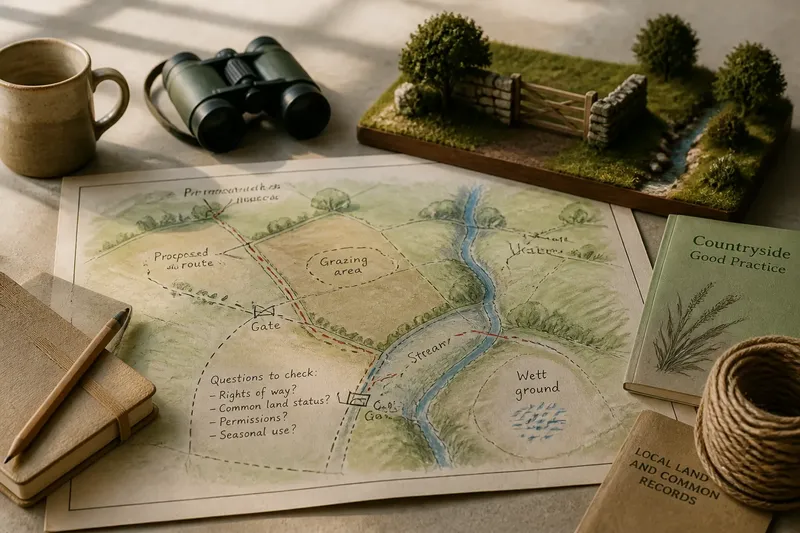
A careful account begins with observable details: the tasks people do, where they travel, what land or facilities they use, and which customers or suppliers they rely on. This is like checking a map before choosing a route: the details help reveal what needs attention.
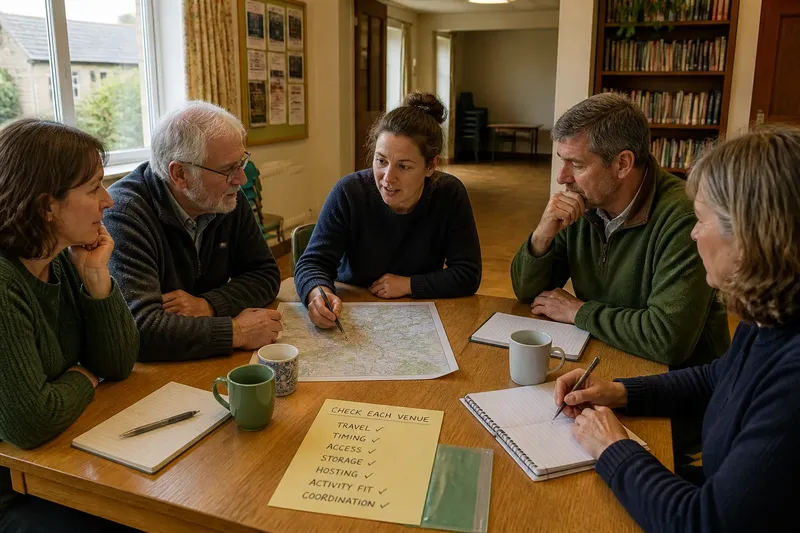
Imagine a village where a small producer sells through a regional distributor, works from a shared building, and travels to collect supplies. The producer’s starting point is a local business with an outside customer base and a need for workspace and transport. If local planners speak with the producer and other workers, then identify shared barriers, they can compare support for the building, transport coordination, or training; the resulting decision will depend on which barrier is common and within local authority to address.
For rural work, the useful question is not whether an older economy has returned, but what is changing here and what would help local people take part. Describing tasks, places, and relationships clearly gives a community a sounder basis for deciding where support belongs.