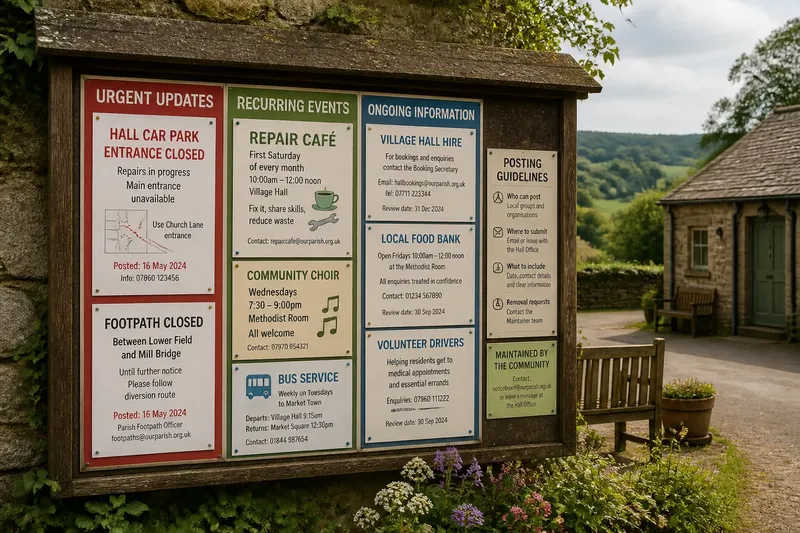
One Shared Room or Several Small Venues?
Compare one shared room with several small venues to match meeting space to local groups’ access needs, schedules, activities, and available upkeep.
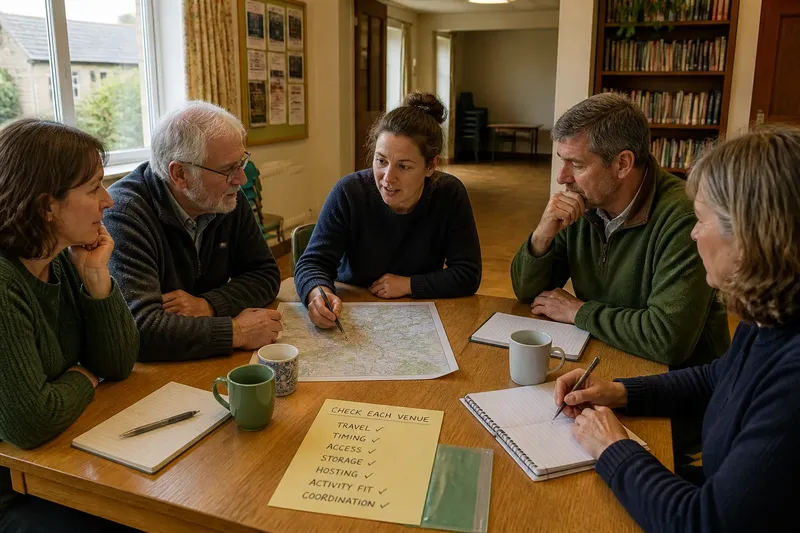
The common mistake when choosing meeting space is to compare floor plans before asking who needs to use each room. One shared room can be easy to locate but hard to book; several small venues can offer choice while adding coordination work. The costs appear in missed meetings, difficult travel, or volunteer time spent arranging access.
One shared room puts convenience and pressure in one place
A multipurpose room in a village hall, library, school, or community building gives groups a familiar address. Tables and chairs can support a residents’ meeting, craft group, exercise class, or advice session. A single location also makes it simpler to tell attendees where to go.
The same room can become a bottleneck. Groups may want the same evenings, and a room set up for one activity may need to be cleared before another can begin. Booking, storage, cleaning, and access arrangements all depend on the same site. If the caretaker or volunteer team has little availability, the calendar and the people who manage it set the room’s practical limits.
Room turnover is like passing a library book from one reader to the next: the next person can begin only when the previous user has returned it in usable condition. A clear reset routine and suitable storage can make transitions easier. Fixed furniture or equipment that must be moved may make each change more demanding.
Several small venues spread access and coordination
Options might include a church side room, a library corner, a workshop classroom, or a room in a local business. Different locations can bring activities closer to different parts of a rural area and reduce competition for one calendar. A quiet room may suit confidential conversation, while a larger hall remains available for gatherings that need more space or equipment.
More addresses help only when people can reach and use them. A venue near one cluster of homes may be inconvenient for residents elsewhere. Some rooms have restricted opening hours, little storage, or a host who must be present. Separate locations can also mean separate keys, booking contacts, access details, and cleaning expectations.
Imagine a fictional parish with a central hall that is usually booked on weekday evenings and a library room that is free then. The committee checks that the library stays open, has an accessible entrance, and allows the discussion group to meet privately; it then moves that group to the library and keeps larger public meetings in the hall. The observable result should be fewer calendar conflicts without a new access barrier. If the library’s hours or setting do not suit the group, the committee should keep looking rather than treating the move as a solution.
Check the work and access each venue requires
Convenience includes knowing how to reserve a room, entering it, and having enough time to set up. Flexibility depends on whether the space fits an activity without extra equipment, permission, or volunteer effort. For each venue under consideration, record the observation and the decision it calls for:
- Travel: Check which communities are near the venue and whether people without a car have a workable route. If travel is a barrier, choose a more reachable site or provide another local option; otherwise, keep the venue in consideration.
- Timing: Check opening hours, recurring bookings, and setup and cleanup time. If the available slot cannot cover the activity, seek a different time or room; otherwise, retain the slot as a possible fit.
- Access: Confirm the entrance, toilets, seating, and other features attendees need. If a required feature is missing, choose another room or arrange a suitable alternative before booking; otherwise, proceed with access details clearly stated.
- Storage: Check whether materials can remain on site or must be carried in and out. If transport and storage create too much work, use a room with suitable storage or reduce the equipment needed; otherwise, agree where items will be kept.
- Hosting: Identify who handles keys, bookings, opening, closing, and routine care. If no one can take these tasks on, choose a venue with simpler access arrangements; otherwise, record the named contact and duties.
- Activity fit: Check layout, privacy, noise, and available equipment against the planned activity. If a room cannot support a necessary part of the activity, choose a better fit or adapt the activity; otherwise, confirm the setup with the venue contact.
- Coordination: Check whether organizers can find current venue information and reach the right booking contact. If several contacts or unclear details are likely to confuse people, use one shared information page or simplify the venue plan; otherwise, publish the confirmed details.
Say a fictional residents’ group is choosing between a village hall and a library room for a weekly discussion. Its starting inputs are a hall that is free at the desired time but requires chairs to be returned after each meeting, and a library room that is nearer to several attendees but closes before the group’s usual end time. The organizers first check whether the library can offer a later slot; it cannot. They then ask the hall contact to confirm that the group can leave chairs in the agreed layout and identify a volunteer to lock up. The resulting decision is to use the hall for now, publish its access instructions, and revisit the choice if the lock-up duty cannot be covered. The tradeoff is a longer trip for some attendees in exchange for a workable schedule and a defined closing plan.
Choose a pattern that can adjust to local use
The choice does not need to be permanent or all-or-nothing. A central room can serve as the default for open meetings and activities that need shared equipment, while smaller venues host groups whose location, schedule, or need for quiet makes them a better fit. This keeps a common meeting place available without making every activity compete for it.
Before changing arrangements, clarify who decides bookings, which activities are welcome, and how users will learn about changes. A shared calendar or a named contact for each venue can reduce confusion. For a room offered by another organization, agree on access, storage, and recurring times instead of assuming they are included.
Ask organizers and likely attendees what prevents them from using a space, then compare their answers with actual availability and upkeep demands. Preferences may differ: one group may value a familiar central address, while another needs a nearby room. Check venue rules and local requirements before relying on a building for a particular activity.
What should a rural group ask before choosing meeting space?
Is one central room always easier to manage?
It reduces the number of locations, but concentrates bookings, maintenance, and setup demands. Its usefulness depends on whether the schedule and layout fit local activities.
Do several venues automatically improve access?
They can bring meetings closer to different communities, but distance is only one part of access. Opening hours, transport, entrances, and clear booking information can still make a nearby room hard to use.
How can groups avoid confusion across venues?
Publish current room details in one dependable place and name a contact for each site. Organizers should be able to confirm the address, access arrangements, and booking status without relying on informal messages.
Can a group combine one main room with smaller spaces?
Yes, if each venue has a clear purpose and the extra coordination remains manageable. Keep the central room for activities that benefit from shared equipment or a common gathering place, and use smaller rooms where their location or setting meets a specific need.
Keep the arrangement accountable to its users
One shared room or several small venues assigns travel, booking work, and upkeep in different ways. The better fit is the one residents can use and maintain with the people and resources available locally.
Review the arrangement when groups change, a venue’s availability shifts, or booking conflicts recur. Notice cancelled meetings, unused room slots, and repeated requests for another location. These are useful prompts to revisit the decision; the main search phrase, one shared room or several small venues, names a choice that should follow actual use rather than habit.