The Many Jobs of a Rural Noticeboard
A rural noticeboard can help neighbors spot urgent updates, recurring events, and lasting information through clear sections, dates, and simple posting rules.
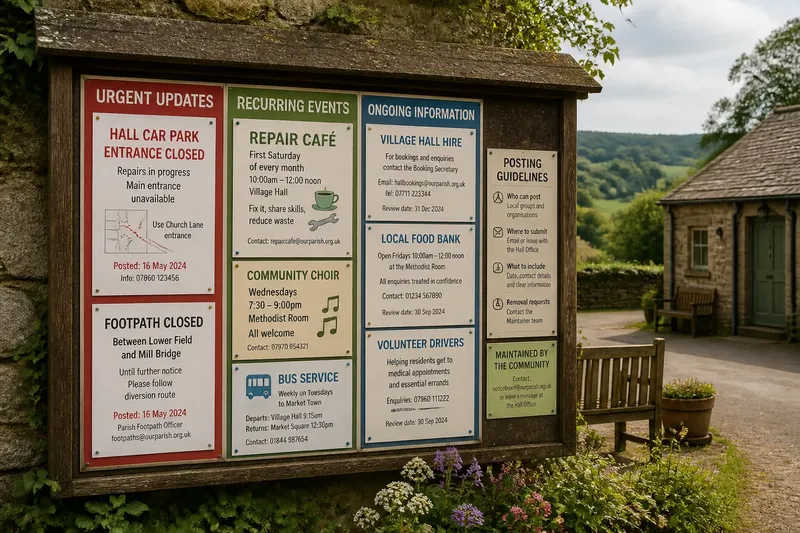
The common mistake with a rural noticeboard is giving every sheet the same space and status. A storm closure, next month’s seed swap, and a standing bus timetable can blur together, costing readers time and making urgent information easy to miss. A clear rural noticeboard sorts information by how quickly it changes and shows who is responsible for keeping it current.
Sort notices by how quickly they change
People stop at a community board with different questions. Someone may need to know whether a footpath is closed today; another person may be looking for the next choir rehearsal. A visitor may simply need the library’s opening hours. Separate sections let readers find the right kind of notice without scanning every sheet.
Use three plain headings:
- Urgent updates: short-lived changes, such as a canceled gathering, temporary road closure, or relocated collection point.
- Recurring events: activities that happen on a regular schedule, such as a monthly repair café or weekly bus service.
- Ongoing information: details that remain useful until checked again, such as service contacts or volunteer opportunities.
Make the headings large and easy to distinguish. A simple arrangement using paper panels, taped lines, or separate boards is enough. Think of the sections as labeled trays at a village hall reception desk: each one directs a different request to the right place.
Give urgent updates a clear beginning and end
Urgent information often gets pinned wherever there is room, then left up after circumstances change. It can look like an ordinary event flyer even when it affects a reader’s plans today.
Reserve a visible area for short-lived updates. Each notice should include its posting date, what has changed, and a source or contact for questions. Put the practical point in the headline: “Hall closed tonight” is easier to scan than a decorative title.
Name a maintainer or small rotating team to check that urgent notices are readable, dated, and removed when they no longer apply. Their job is to keep information clear, not to decide which local concerns matter. If a change affects several places, the notice can direct readers to a fuller source rather than crowding the board with detail.
Say you are helping maintain a board outside a village hall, and a repair will temporarily close the usual parking entrance. You date a notice, name the affected entrance, and give the organizer’s contact route. After the repair is complete, the maintainer removes the notice; readers then see the regular events and standing information without mistaking the old closure for current news.
Keep recurring events distinct from one-off changes
Regular activities may produce a new flyer for each session. If old copies remain beside the latest one, readers can find conflicting times or contact details. The fix is to distinguish the usual schedule from an exception.
Give recurring activities their own section. A standing notice should name the activity, its usual schedule and location, the organizer, and a contact route. If one session changes, post a temporary update in the urgent area and refer readers to the standing notice for the normal arrangement.
Ask organizers to add an end date or review date to notices that may change. The date prompts someone to confirm the details; it does not mean the activity must end then. Where groups share the board, agree on a legible format and similar paper sizes so notices are easy to compare without requiring identical designs.
Review ongoing notices before they lose credibility
A notice can seem permanent simply because nobody has removed it. A service may move, a contact route may change, or a volunteer role may be filled. Without a date or named source, readers have little reason to know whether the information still applies.
For ongoing notices, include the responsible organization or person, a contact method, and a review date. When that date arrives, the notice owner can confirm the details and set a new review date, or remove or replace the notice if it is no longer useful.
Keep these notices focused on information people may need repeatedly: how to access a local service, find support, raise a concern, or join an ongoing group. A request for volunteers should say what the task involves and who can answer questions. Avoid posting personal information or details that could expose someone to unwanted contact; use a general organizational contact route instead.
Make posting rules visible and fair
When posting rules are unclear, contributors make different assumptions. Someone may cover a timetable with a handwritten note, while another person may hold back a useful announcement because they do not know whom to ask.
Place brief guidelines beside the board. Say who may submit material, where to send it, what details to include, and who handles removal requests. Depending on local arrangements, the contact might be a community group, hall office, library desk, or shared email address. For an outdoor board, explain whether notices need weatherproofing or should be given to the maintainer.
Set neutral standards: readable text, a date, a source or contact, and a clear connection to local life. If space is limited, agree on a fair rotation rather than letting the most visible area belong indefinitely to the same group.
- Check the date: If a notice has passed its event date, remove it; if the event is still ahead, keep it in the appropriate section.
- Check for a source or contact: If readers can follow up, leave the notice in place; if not, ask its owner to add a contact or remove it until one is supplied.
- Check whether an urgent update still applies: If the change is over, take it down; if it remains active, confirm the details with its named source.
- Check for duplicate event details: If copies conflict, ask the organizer to confirm the current schedule and replace the old versions; if they agree, keep one clear copy.
- Check ongoing information against its review date: If the owner confirms it is current, retain it and mark a new review date; if it is outdated or unconfirmed, remove it or request a correction.
- Check whether the board is crowded: If expired notices take up space, remove them first; if current notices still do not fit, use another approved local outlet rather than shrinking the text.
How should a rural noticeboard be maintained?
Who should maintain a rural noticeboard?
Name a maintainer or small team and display a contact route. Readers and contributors then know whom to approach about posting, corrections, or removal.
How often should notices be checked?
Choose a routine that fits the board’s location and local activity. Check urgent updates promptly, and review ongoing notices by the dates shown on them.
What should a recurring event notice include?
State the activity, usual schedule, location, organizer, and a way to ask for details. Put any one-off change in a temporary update so readers can distinguish it from the normal arrangement.
What should happen when the board is full?
Remove expired notices first and ask owners to confirm undated information. If current notices still do not fit, use another approved place, such as a local printed bulletin, instead of making the text hard to read.
Keep the board useful to the people who share it
A rural noticeboard connects neighbors to practical updates, local services, gatherings, and ways to contribute. Its layout should reflect how people use information: some details need attention now, some repeat, and others remain useful only while someone keeps them current.
Make the sections easy to recognize, give each notice a source or owner, and remove material when its purpose has passed. A brief conversation with the groups that use the board can identify missing information or confusing overlaps. This simple maintenance habit keeps the rural noticeboard legible without turning it into one person’s private domain.